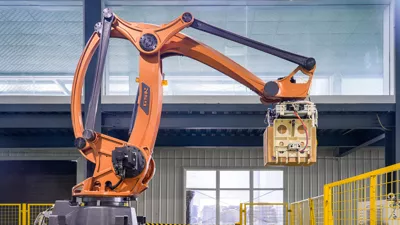


Since the dawn of automation, the food packaging industry has always been a top consumer of robotics for their production lines. The fast-paced food packaging industry works hard to keep up with the growing demands of consumers and recently has been trying to overcome the recent global events and concerns. The food packaging robotics market size is expected to grow by over $1.03 billion in 2022. The COVID-19 pandemic has increased public interest in food safety with many consumers demanding transparency and pushing for more regulations and requirements for food packaging. This public outcry has incentivized companies to eliminate even more human contact from their food packaging production lines. To meet the growing food safety and output demands of consumers, the food packaging industry is once again turning towards more automation.
Pick and Place Robots
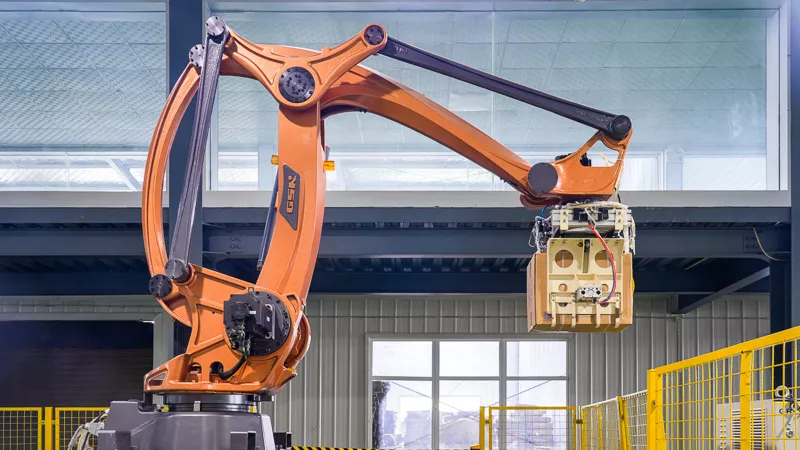
Pick and place robots can be found in all three levels of packaging with many different applications from loading raw food products into packaging trays or cartons to loading packaged goods into tertiary packaging. Pick and place robots are a simple yet powerful way to automate the food packaging process. Pick and place robots use sensors to locate and quickly relocate products. They are easily integrated into existing lines and can be flexibly designed based on the customer’s applications.
Boxing Robots
The simple task of boxing up food in the secondary or tertiary packaging process is easy to automate. In secondary packaging, where the food products are already enclosed in primary packaging, there is a lower risk of contamination so the boxing robots are not required to be food safe or hygienic. Pick and place robots are the most common in these applications. With the ability to move products quickly and delicately, pick and place robots are the optimal choice for boxing.
Palletizing Robots
Palletizing or palletization is the action of placing products on a pallet for shipment or storage. The products need to be arranged and stacked in a pattern that maximizes the number of products that fit on the pallet while preventing products from shifting and possibly crushing each other. When palletizing during the tertiary packaging process, robots take over the heavy lifting labor of arranging and moving products onto pallets. As one of the most common robotics applications in the food packaging industry, robots are flexible enough to handle the different tasks in the palletizing process. Robotic solutions can handle mixed pallets with products of various shapes and sizes.

Hi, I'm Maggie — I help food and beverage brands find the right aseptic carton and flexible packaging solutions. With years of hands-on experience in the packaging industry, I specialize in building strong, trust-based relationships with clients from diverse markets. I focus on understanding each client's unique needs and providing fast, reliable support from inquiry to delivery. I believe in clear communication and practical, tailored solutions. My goal is not only to deliver quality packaging, but to make every collaboration smooth, responsive, and mutually rewarding.


Related Topics:
You may also like
Related News

Jinniu New Material Holds 2022 Work Conference
Jan 01, 2022
The Rise Of Reusable Biodegradable Shopping Bags
Jan 08, 2022